Raydiant III
2009-11-07 at 09:27 | Posted in Computer path | Leave a commentTags: 3D, C++, fractal, game, procedural, ray tracing
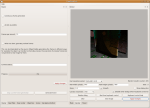
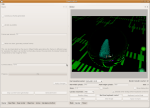
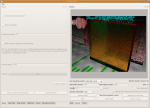
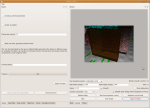
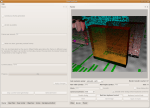
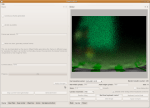
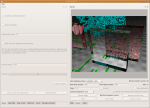
OK, after a lot of debugging the Raydiant engine is starting to behave, so much so that even transparent, translucent and diffuse reflective materials look good even on preview mode. And preview mode generates frames at an interactive rate, I’m having so much fun moving around in this test scenario. At this stage of developing only 1 thread is still currently being used. I can’t wait to increase that number to 8, the optimum for my i7. Of course once this mechanism is coded and debugged you will be able to select any number of threads, something appropriate for your particular system.






Raydiant II
2009-11-07 at 09:18 | Posted in Computer path | Leave a commentTags: 3D, C++, fractal, game, procedural, ray tracing
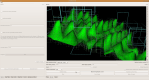
The new Raydiant engine will be able to accurately simulate light dispersion and coupling a new architecture several times faster with the new multithreaded ability with no synchronization overhead things are looking good. The ability to visualize the recursive grid spatial partition has been very useful for debugging and intellectual enjoyment also. But all this is still theory because by now only preview mode interactive and static renders had been obtained:



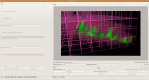
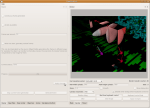
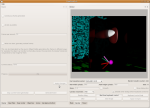


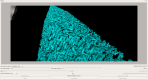

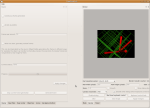

i7 2930MHz 4x2threads: Raydiant
2009-11-06 at 21:57 | Posted in Computer path | Leave a commentTags: 3D, C++, fractal, game, procedural, ray tracing
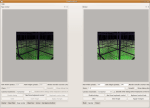
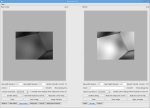
So after finishing and using the Raydiosity engine I could see some ways to improve the quality and performance of the renders. And with the new true multikernel CPUs may be even realtime true radiosity interactive movement could be achieved, a game can be made… . As with the previous Raydiosity engine a fundamental feature is a strong and easy procedural geometry and texture generation API. This time I linked with Qt library. After 6 months of redesign and heavy coding this are some of the screen shoots of the new Raydiant engine in preview mode (most of them are obtained at interactive rates):


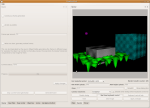
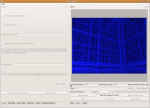

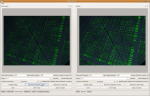



Pentium IV 3000MHz V: Raydiosity fruit
2009-11-05 at 19:50 | Posted in Computer path | Leave a commentTags: 3D, C++, fractal, game, procedural, ray tracing
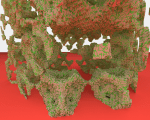
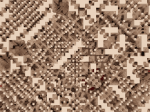
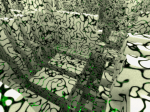
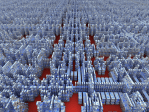
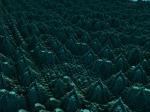
Many experiments involving procedural generation of geometry were conducted with the Raydiant engine, some of them may be technically interesting or aesthetical. A bunch of them:
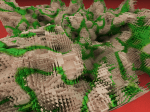
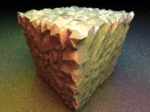
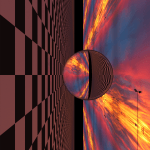




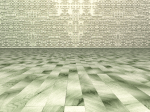


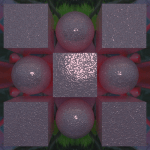
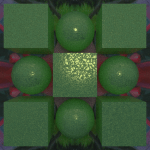
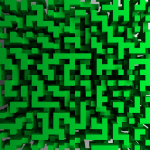


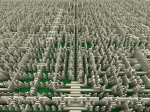










Pentium IV 3000MHz IV: Raydiosity GUI
2009-11-05 at 18:25 | Posted in Computer path | Leave a commentTags: 3D, C++, fractal, game, procedural, ray tracing
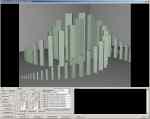
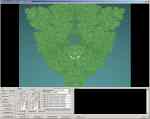
The Raydiosity engine was a pure command line program so I developed a front end on top. It allowed for interactive frame generation on preview mode so you could move around and explore the procedural scenarios, this are some screen shoots:


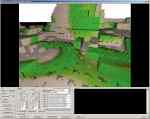

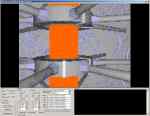


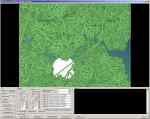
Pentium IV 3000MHz III: Raydiosity
2009-11-05 at 18:17 | Posted in Computer path | Leave a commentTags: 3D, C++, fractal, game, procedural, ray tracing
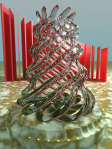
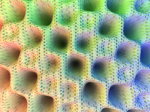
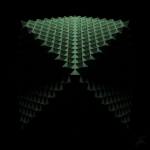
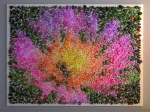
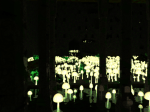
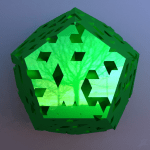
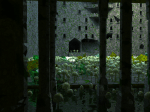
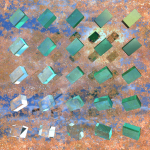
So I put myself to work very carefully, stayed designing on paper and CASE tools the Raydiosity engine about 2 months before starting writing a single line of C++. Raydiosity engine is a path tracer and was linked with no library except standard C++ basic libraries so everything on it is built from scratch. The engine was prepared to be executed on any number of computers at the same time and on each computer any number of instances of the engine could be launched simultaneously. Everything was controled with a front-end. Most of the renders were synthesised with a K7 (1 Raydiant instance) and a P4 (2 Raydiant instances). It took 6 months to get the engine working. I prefer equations and algorithms to hand-made mouse design so a great amount of effort has been put on the geometry and texture procedural API. Almost without exception all Raydiosity renders use exclusively procedural entities. Wanted to translate to reality some images I had in my mind to share them with friends, here they are:















Pentium IV 3000MHz II: fabric
2009-11-04 at 19:46 | Posted in Computer path | 2 CommentsTags: 3D, C++, fractal, game, procedural, ray tracing
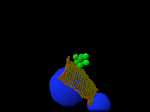
I missed some fabric simulation from my physic engine so I played with some spheres united trough invisible bumpers and it worked well. Also I tried same technique for percolation of an elastic membrane:



Pentium IV 3000MHz: Happy Cube
2009-11-04 at 19:31 | Posted in Computer path | Leave a commentTags: 3D, C++, fractal, game, procedural, ray tracing
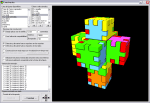
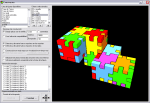
This is an improved revamped remake with steroids of my old 286 Happy Cube puzzle solver, that got properly settled at last. The full documentation, source code and binaries can be downloaded here:
https://app.box.com/shared/e8lh3fxvn9




Fun at 700MHz IX: birth of Raydiosity
2009-11-04 at 19:26 | Posted in Computer path | Leave a commentTags: 3D, C++, fractal, game, procedural, ray tracing
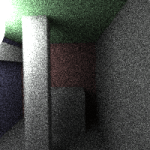
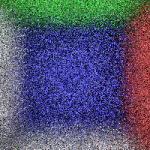
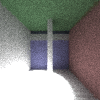
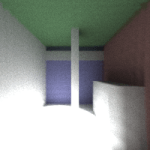
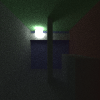
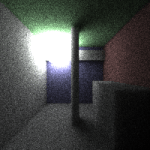
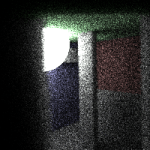
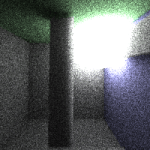
I was really a little upset that all my renders had a synthetic quality, they looked cool but not real. In addition didn’t like traditional radiosity techniques that tried to divide the scene into surface patches and then solve a gigantic equation system. So I tried some brute force Montecarlo and then imagined some improvements, this was the result and origin of the Raydiosity engine:

Fun at 700MHz VIII: viscosity
2009-11-04 at 19:20 | Posted in Computer path | Leave a commentTags: 3D, C++, fractal, game, procedural, ray tracing
Follow your intuition and get nice results. This are screen shoots from the real time demo:


- Computer path (rss) (58)
- September 2023 (1)
- July 2020 (1)
- August 2018 (1)
- September 2016 (1)
- December 2012 (1)
- October 2012 (1)
- January 2012 (1)
- December 2011 (1)
- September 2011 (1)
- August 2011 (1)
- April 2011 (1)
- March 2011 (1)
- February 2011 (1)
- January 2011 (1)
- September 2010 (2)
- August 2010 (1)
- June 2010 (3)
- May 2010 (5)
- April 2010 (3)
- February 2010 (1)
- January 2010 (1)
- December 2009 (1)
- November 2009 (23)
- October 2009 (4)
Categories:
Archives:
Blogroll


Blog at WordPress.com.
Entries and comments feeds.
 Alberto's Blog